
Last Updated: November 17, 2026
Quick Summary
The best way to learn how to reduce plastic waste in laundry is to address two sources: the detergent packaging you buy and the microfibers synthetic clothes shed in the wash. Switching to plastic-free detergent formats, washing less often in cold water with full loads, and choosing natural fibers cut both at home.
- Liquid detergent jugs and caps are a major source of laundry packaging, and many are not recycled.
- Polyester, nylon and acrylic fabrics shed microscopic fibers that pass through household drains.
- Washing less often, using cold water and running fuller loads reduces fiber release.
- Powder in cardboard boxes usually has the lightest packaging, and detergent sheets suit small spaces.
- Dry captured lint, seal it, and throw it in household waste rather than rinsing it down the drain.
Table of Contents
If you want to know how to reduce plastic waste in laundry at home, start by looking at what your laundry routine actually throws away. At GREENWHIRL, we see two separate sources of plastic in a typical load: the packaging that holds the detergent and the tiny fibers that leave your clothes every time they go through the machine. Both matter, and they call for different fixes.
The short answer is that most laundry plastic comes from two places, the jugs and caps you buy and the microfibers your synthetic clothes release. Packaging is the easier target because you can see it. Microfibers are harder because they wash away with the water.
U.S. Environmental Protection Agency guidance on plastic pollution sources
Plastic packaging: jugs, caps and pods
Liquid detergent typically arrives in a rigid plastic jug with a separate cap, and the bulk of its weight is water. Many households go through several jugs a year, and most of those containers are not recycled, because the caps and labels complicate the process and rinsing is often skipped.
Pods add another layer. Each one is wrapped in a film, and they are sold in plastic tubs with an additional inner bag. Refill cycles mean more packaging, even when the product itself is concentrated.
Watch out: rinsing a jug thoroughly before recycling takes water and effort that many people skip, so a jug that looks clean may still be sent to landfill. Check your local recycling rules for caps and labels before tossing anything.
Microfibers shed from synthetic clothing
Polyester, nylon and acrylic fabrics shed microscopic fibers during washing, and those fibers pass through household drains. Fabrics made from natural fibers shed less of this material, and the amount released depends heavily on fabric type, wash cycle and how often clothes are washed.
A common mistake is focusing only on packaging while ignoring what leaves the washing machine. Fixing the packaging alone leaves the fiber problem untouched, which is why the next sections cover both.
How to Reduce Microplastics From Laundry Through Fabric and Wash Habits
Your choices about what you buy and how you wash have a larger effect on microplastic release than most people expect. The two levers that matter most are the fabric content of your wardrobe and how often and how you run the machine.
Choosing natural fibers and buying fewer synthetics
Cotton, linen and wool release fewer synthetic fibers than polyester blends. You do not need to replace everything at once. When a synthetic item wears out, replace it with a natural-fiber option and keep the synthetic piece until it has done its job.
Fleece is one of the heaviest sources of shedding, so a fleece jacket is worth reconsidering even if you keep the rest of your wardrobe as it is.
Washing less often, using cold water and fuller loads
Clothes that are not visibly dirty often do not need a full wash after a single wear. Airing them out and spot-treating small marks reduces the number of cycles and the fibers released with them.
When you do wash, cold water and a fuller drum both help. Gentle or delicate cycles can increase friction in some machines, so a standard cycle with a full load is often a better compromise.
Plastic-Free Laundry Detergent: Formats and Trade-Offs
Plastic-free detergent is not a single product type, and each format involves trade-offs. Powder comes in cardboard boxes and usually has the lightest packaging. Concentrated liquid reduces the number of jugs you buy, though it still uses a plastic container.
Detergent sheets are a plastic-free option that suits small spaces well. They are lightweight and do not require a bulky container.
If you live in a small apartment, this guide to choosing eco-friendly laundry detergent for small apartments covers how each format fits limited storage. For a practical question about dosing, see how many laundry sheets per load you need.
Evaluating Microfiber Filters, Capture Bags and Lint Disposal
Several products claim to capture microfibers before they reach the drain. Washing machine filters attach to the drain hose, mesh capture bags hold garments during the cycle, and lint-catching balls collect loose fibers in the drum. Each has different strengths, and independent evidence on how much each one captures is still limited, so treat any claimed percentage with caution.
Captured lint and filter waste still needs disposal. Dry it, seal it, and place it in household waste rather than rinsing it down the drain or composting it, because the fibers do not break down.
How to Avoid Microplastics in Clothing You Already Own
You do not need to throw out your wardrobe to cut microplastic release. Wash synthetic items inside a mesh bag, use cold water and avoid overloading the drum. Air-drying instead of using a tumble dryer also reduces fiber loss, because heat and tumbling both break fibers loose.
Sensitive skin is a separate reason people look at fabrics.
A Prioritized Low-Plastic Laundry Routine for Any Budget
Start with the changes that cost nothing. Wash less often, switch to cold water, run full loads and hang-dry where you can. Those steps reduce both fiber release and energy use.
Next, choose a plastic-free detergent format that fits your space and budget. Finally, add a capture product if you want an extra layer of protection. A household with a tight budget can stop at the first step and still make a measurable difference.
Measuring Your Impact and Being Honest About What Is Uncertain
Tracking progress is harder than it sounds. You can count the jugs you no longer buy and the cycles you skip, but the amount of microfiber your machine actually releases is difficult to measure at home. Be cautious about any product or guide that promises a precise reduction figure without a clear method behind it.
Trying Refillable Detergent Sheets as Your Next Step
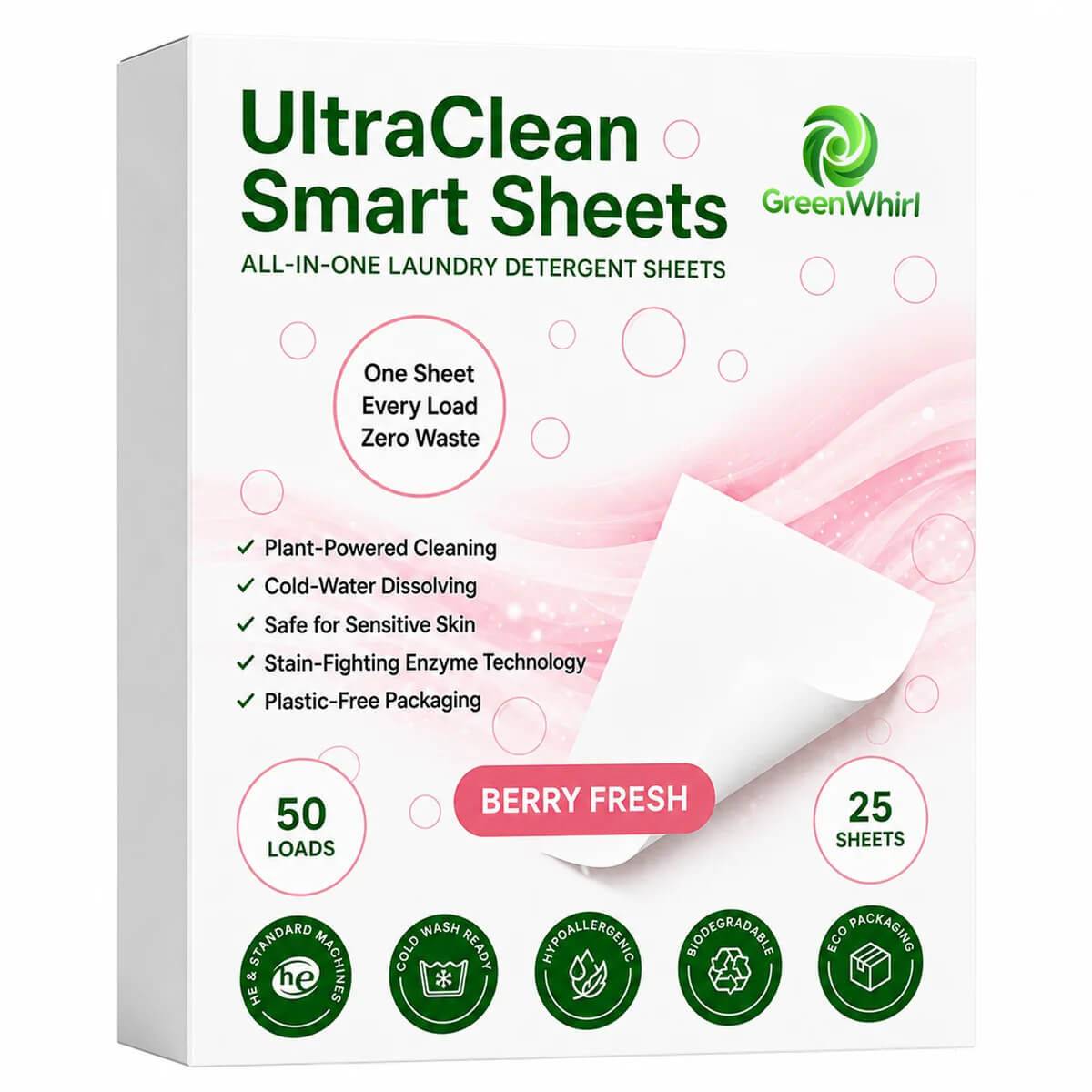
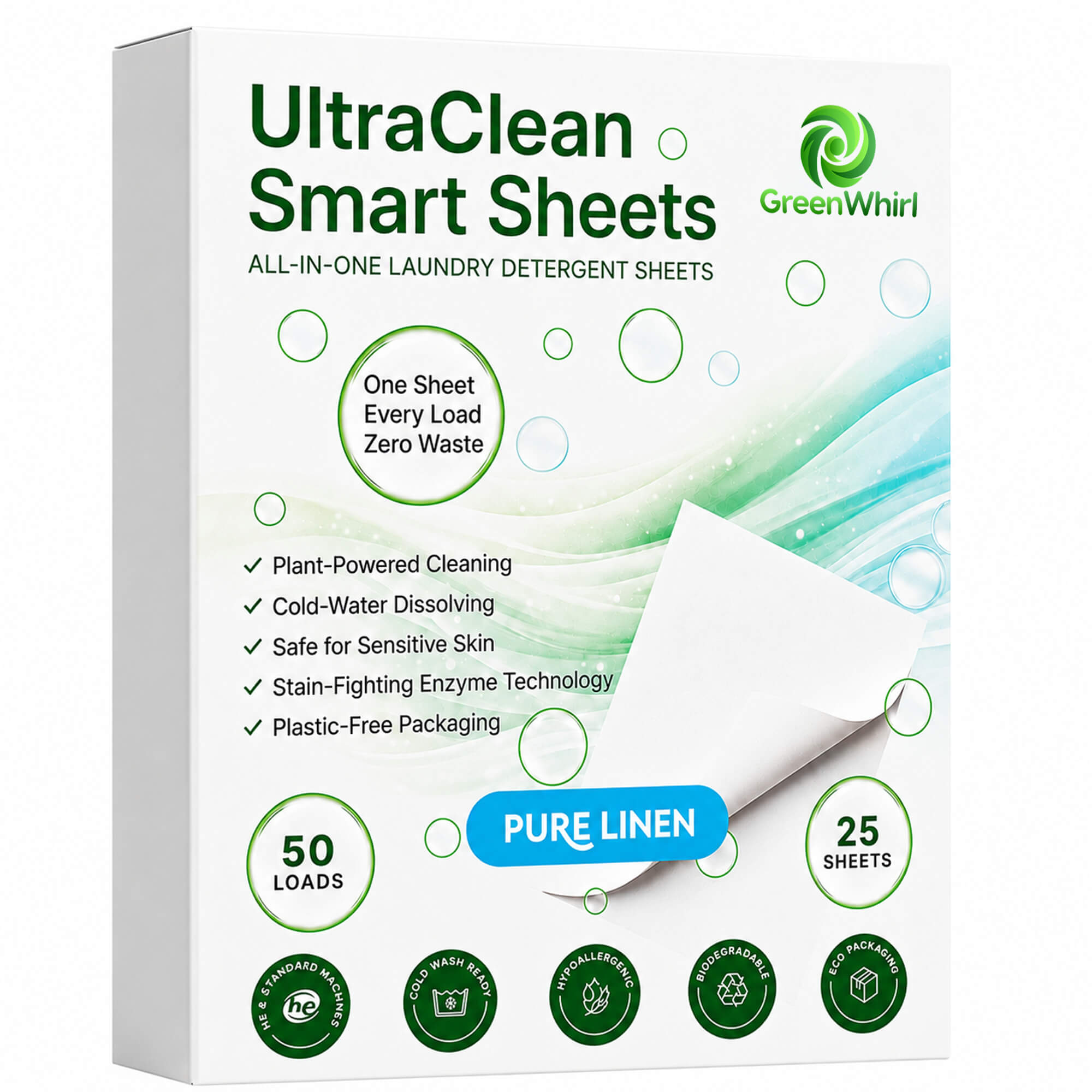
If you want to test a plastic-free format, GreenWhirl's detergent sheets are one option to try. Each box holds 25 perforated sheets for up to 50 loads, and you can use half a sheet for a smaller load or a full sheet for a larger one. They are sold in two scents: Berry Fresh Scent for $16.99 and Pure Linen Scent for $16.99. Both are plant-based and bleach-free.
Frequently Asked Questions
What are 5 ways to reduce plastic waste?
Five practical ways to cut plastic waste at home are switching to refillable or plastic-free packaging, buying in bulk, using reusable bags and containers, choosing durable natural-fiber goods over disposable items, and repairing or reusing products instead of replacing them. In laundry, the same logic applies: swapping plastic detergent jugs for plastic-free detergent sheets removes a bulky container from every load cycle, and washing clothes less often reduces the volume of synthetic fibers released. Start with the change that is easiest for your household, then add others as habits settle.
Which laundry detergent doesn't have microplastics?
Detergent itself is rarely the main microplastic source in laundry, since most microplastic release comes from synthetic textiles shedding fibers during washing. That said, you should check ingredient lists and packaging claims rather than assume. Plastic-free formats such as detergent sheets avoid plastic jugs entirely, and GreenWhirl UltraClean Laundry Detergent Sheets are plant-based, bleach-free and sold in plastic-free packaging. For fiber shedding specifically, the bigger levers are fabric choice, wash frequency, cold water and capture tools.
Are detergent sheets a good alternative to plastic detergent bottles?
For many households, yes. Detergent sheets remove the plastic jug, reduce spill risk and take up less storage space, which suits apartments and travel. Each box of GreenWhirl UltraClean sheets contains 25 perforated sheets for up to 50 loads, and you can use half a sheet for a smaller load. Sheets dissolve in hot, warm or cold water.
How can I reduce microfibers released when I wash clothes?
Wash clothes less often when they are not visibly dirty, use cold water, run fuller loads rather than many small ones, and avoid gentle cycles that can increase shedding. Choosing natural fibers and buying fewer synthetic garments also lowers the source material. A washing-machine microfiber filter or capture bag can catch some fibers before they leave the machine, but evidence on how much each product captures varies, so treat them as one layer of a broader routine.
Do microplastics stay in your washing machine?
Some fibers and residue can build up in the drum, door seal and drain filter over time, which is one reason to clean those parts regularly and empty any lint filter after each load. Using less detergent and avoiding overdosing also limits residue. Captured lint should go in the trash rather than down the drain, since it contributes to wastewater pollution.
How can I use less plastic in my laundry routine?
Start with packaging: replace plastic detergent jugs with detergent sheets or refillable options, and avoid single-use fabric softener bottles by skipping softener altogether, since it is not needed for clean clothes. Then reduce how often you wash, hang-dry where practical instead of using a tumble dryer, and store clothes in reusable containers rather than plastic bags. Each change is small, but together they remove most avoidable plastic from the routine.
