
Last Updated: November 13, 2026
Quick Summary
Choose detergent sheets for sensitive skin by checking the full ingredient list, not the marketing: look for a formula free of synthetic fragrance, dyes, optical brighteners, bleach, and phosphates. Note that hypoallergenic is not a regulated term for laundry products, so verify ingredients and patch-test one load before committing.
- Refreshing scents like Pure Linen and Berry Fresh can complement a hypoallergenic formula designed to be gentle on sensitive skin.
- Laundry detergent sheets free from bleach, phosphates, and fluorescent brighteners can deliver effective cleaning without leaving gummy residue on clothes.
- Use half a sheet for small loads and a full sheet for large ones to limit residue.
- GreenWhirl's 25-sheet box costs $16.99 and covers up to 50 loads.
- Sheets struggle most with set-in stains, heavy odor, and hard water that interferes with dissolving.
Table of Contents
- What Sensitive Skin Actually Needs From a Detergent Sheet
- Scented Laundry Detergent Sheets: What Sensitive Skin Users Should Know
- Hypoallergenic Laundry Detergent Sheets: Evidence vs. Marketing
- Laundry Detergent Ingredients to Avoid for Sensitive Skin
- Laundry Detergent for Eczema: Building a Wash Routine That Works
- Stain Removal, Odor, and Residue: Where Sheets Fall Short
- Cost Per Load and Dosing: The Math Most Shoppers Skip
- Picking Your First Box of GreenWhirl Sheets
- Frequently Asked Questions
What Sensitive Skin Actually Needs From a Detergent Sheet
Laundry detergent sheets for sensitive skin solve one problem well: they deliver a measured dose of detergent without dyes, heavy perfume, or a plastic jug. The global market for these sheets is projected to reach $1.5 billion in 2026, growing to $2.5 billion by 2033 at a 7.6% annual rate, according to Persistence Market Research's market forecast. Growth doesn't equal suitability, though. A sheet is only gentle if its formula is.
Sensitive skin reacts to what's left behind after the rinse, not to the format itself. That means the questions that matter are about ingredients and residue, not about whether the detergent comes as a sheet, liquid, or powder.
Here's the uncomfortable truth most shopping guides skip: no federal rule defines "hypoallergenic" for laundry products. The term is marketing, not a standard. What you can verify is the ingredient list and the absence of common irritants.
GreenWhirl's plant-based sheets are formulated without bleach, phosphates, or harsh additives, and dissolve in hot, warm, or cold water. Below, we break down what to check before you buy any sheet, where the category falls short, and how to build a wash routine that won't irritate your skin.
Scented Laundry Detergent Sheets: What Sensitive Skin Users Should Know
Having sensitive skin doesn't necessarily mean you have to give up fresh-smelling laundry. What matters is choosing a detergent formulated with skin comfort in mind.
GreenWhirl UltraClean Laundry Detergent Sheets come in two refreshing scents: Pure Linen, offering a clean, fresh laundry fragrance, and Berry Fresh, delivering a pleasant, fruity scent.
Both varieties feature a hypoallergenic, plant-powered formula designed to be gentle on sensitive skin while effectively tackling everyday dirt, stains, and odors.
Unlike some conventional detergents, GreenWhirl is formulated without bleach, phosphates, or fluorescent brighteners. Its concentrated sheets dissolve in hot or cold water, helping prevent the gummy residue that some laundry detergent sheets can leave behind.
The takeaway: Sensitive skin deserves thoughtful laundry care. GreenWhirl combines effective cleaning, refreshing fragrances, and a hypoallergenic formula to make everyday laundry simpler and more enjoyable.
Hypoallergenic Laundry Detergent Sheets: Evidence vs. Marketing
"Hypoallergenic" on a detergent box is a marketing term rather than a certification.
So what evidence should you look for? Three things carry real weight:
- Third-party testing. Independent testing is more verifiable than an in-house claim.
- A named certification. Ask what any certification or designation measures before you assume it means anything.
- A full ingredient list. A brand confident in its formula publishes every ingredient, not just the highlights.
Consumer Reports tested 14 laundry detergent sheets in 2026, according to Spot Detergent's summary of the testing, but the published excerpt doesn't share the findings. CNN Underscored tested 10 sheets for ease of use and sustainability and liked two products without naming measured results. The takeaway: independent testing exists, but it's thin and inconsistent. Treat marketing language with skepticism until you see the ingredient panel.
Laundry Detergent Ingredients to Avoid for Sensitive Skin
The fastest way to judge any sheet is to read the ingredient list. Here's our short list of what to avoid, and why:
- Synthetic fragrance and perfume. Check the ingredient list for added fragrance if your skin is reactive.
- Dyes and optical brighteners. Check the ingredient list for these if you want a dye-free or brightener-free formula.
- SLS and harsh surfactants. Check the ingredient list if you prefer milder surfactants.
- Parabens, phthalates, and phosphates. Check the ingredient list if you want to avoid these.
- Bleach. Check the ingredient list.
GreenWhirl's sheets are plant-based, hypoallergenic, biodegradable, and free of bleach, phosphates, and harsh additives, with 25 perforated sheets per box for up to 50 loads.
Laundry Detergent for Eczema: Building a Wash Routine That Works
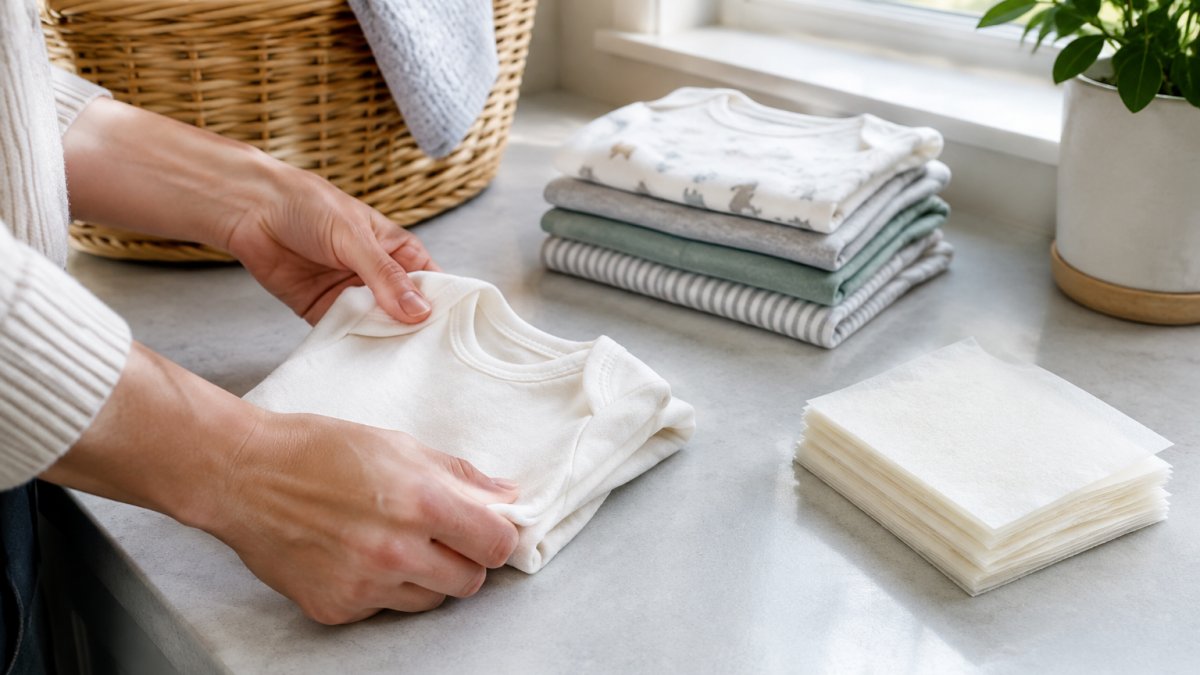
Hands folding a soft cotton baby onesie next to a stack of unscented detergent sheets on a laundry counter.
Laundry residue, meaning what stays in fabric after the rinse, is a common factor in skin irritation.
Start with dose size. Use half a sheet for a small load and a full sheet for a large one.
Read the label the way a clinician would. For sensitive skin, a practical priority is checking for added fragrance, dyes, and optical brighteners in the ingredient list. "Hypoallergenic" is not a regulated term for laundry products, so treat it as a marketing claim and check the full ingredient panel instead. If a brand won't publish every ingredient, that is a reason to keep looking.
Patch-test before you commit to a full wash. Wash one item, such as a pillowcase or a baby onesie, with the new sheet, then wear or sleep on it for a night before running a full load. If you notice a reaction, stop using the product and talk to a clinician.
If you're unsure whether a formula suits your skin, ask before you commit. You can contact our team with ingredient questions before buying.
Stain Removal, Odor, and Residue: Where Sheets Fall Short
Cleaning performance is the most common criticism of detergent sheets, and it deserves a straight answer. Sheet performance can vary because the format depends on the sheet dissolving fully before it can clean.
Where sheets struggle most:
- Set-in stains that need a pretreat step
- Heavy odor on workout gear or pet bedding
- Hard water, where minerals can interfere with dissolving and leave residue
Cold water is where sheet quality shows. A sheet that doesn't fully dissolve leaves film on clothes and in the drum. Detergent needs to disperse in water before it can lift soil, and a compressed sheet has to break down first. GreenWhirl sheets are formulated to dissolve in hot, warm, or cold water.
For odor, wash sooner rather than later, use the longest cycle your fabric allows, and avoid overloading so the drum can move clothes freely.
Cost Per Load and Dosing: The Math Most Shoppers Skip
Price per load depends on how you dose.
A 25-sheet box of GreenWhirl sheets runs $16.99 and covers up to 50 loads when you use half a sheet for small loads.
|
Purchase Consideration |
What to Check |
Why It Matters |
|---|---|---|
|
Sheets per package |
25 sheets = 50 loads |
Halve the dose for small loads |
|
Cost per load |
Divide price by total loads |
Box price is misleading |
|
Dissolving performance |
Hot, warm, and cold water |
Residue irritates skin |
|
Ingredient list |
No fragrance, dyes, bleach |
Reduces reaction risk |
|
Certifications |
Third-party testing claims |
Verifiable vs. marketing |
Picking Your First Box of GreenWhirl Sheets
Start with the scent decision, because it's the one choice that affects sensitive skin most.
If your skin is reactive or you're washing for a baby, consider testing one load first. Our Pure Linen sheets are plant-based, hypoallergenic, and biodegradable, with 25 sheets covering 50 loads. Prefer a different scent? The Berry Fresh sheets are also plant-based and come with 25 sheets for 50 loads.
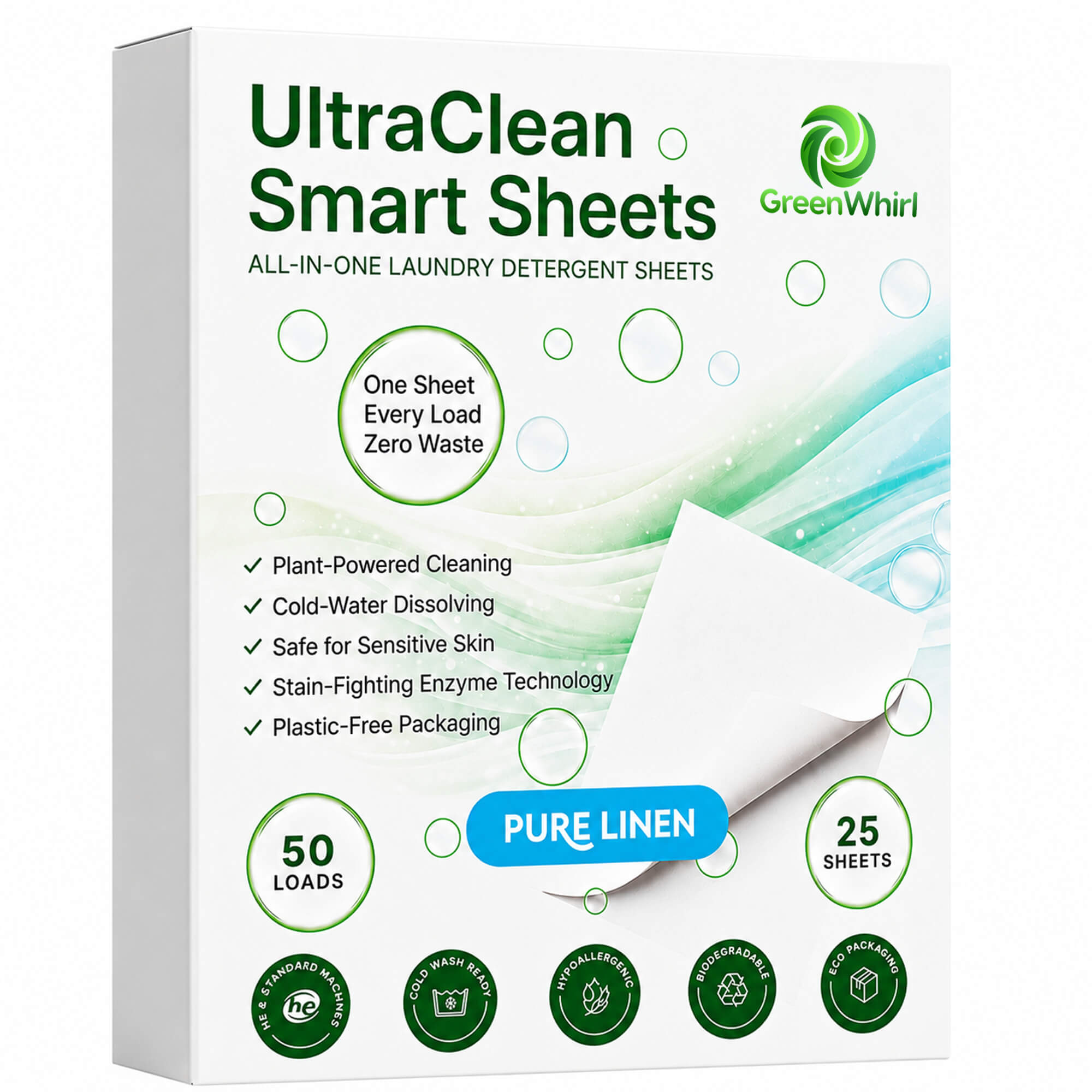
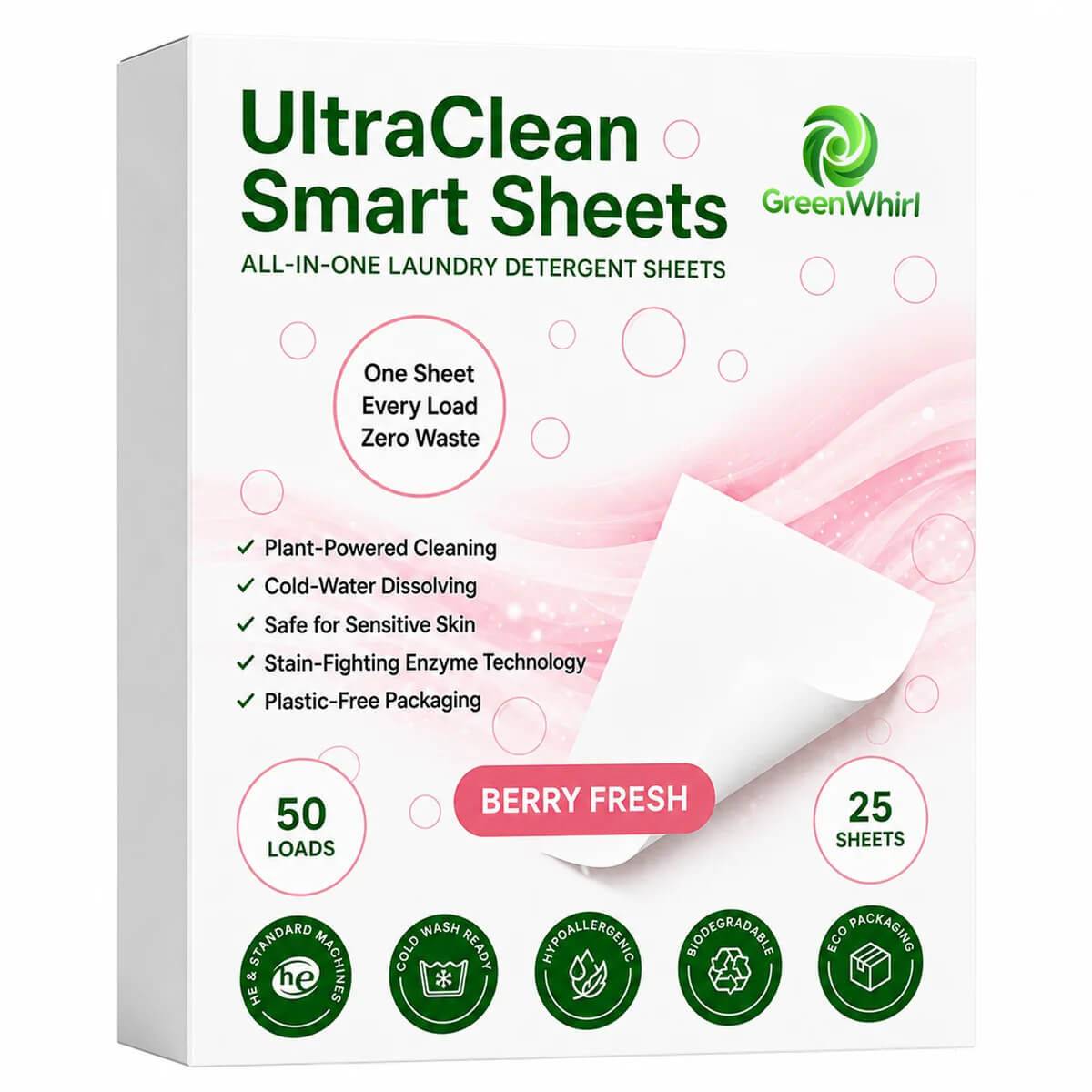
You can compare both scents and current pricing on our eco laundry detergent sheets collection. Whichever you pick, run one test load before using a full box.
Sensitive skin doesn't need a perfect detergent, it needs a predictable one: a short ingredient list, no fragrance surprises, and a dose you control. GreenWhirl's plant-based sheets give you exactly that, with no plastic jugs, no spills, a water-free formula, and hypoallergenic sheets that dissolve in any water temperature. Get started with GREENWHIRL and build a laundry routine your skin can count on.
Which laundry detergent sheets are safe for sensitive skin?
Look for laundry detergent sheets with a hypoallergenic formula designed to be gentle on sensitive skin. Choose products made without bleach, phosphates, or fluorescent brighteners, and check the ingredient list for potential irritants. GreenWhirl UltraClean Laundry Detergent Sheets offer two refreshing scents, Pure Linen and Berry Fresh, combining plant-powered cleaning with gentle laundry care. If you have fragrance sensitivities, test a new detergent on a small load first, as even hypoallergenic scented products may cause reactions.
Why do some experts not recommend detergent sheets at all?
Cleaning performance is the main objection. The New York Times Wirecutter says poor cleaning performance is its primary reason for not recommending any detergent sheets. Consumer Reports tested 14 laundry detergent sheets in 2026, though published excerpts do not detail the findings. If you regularly deal with heavy soil, grease, or ground-in stains, a sheet may need pre-treatment or a second sheet. For everyday light-to-medium loads, the convenience and plastic savings still make them a reasonable trade.
Can laundry detergent sheets leave residue on clothes or in the washer?
Residue is possible when a sheet does not fully dissolve, which usually comes down to overloaded drums, very cold water, or a sheet placed on top of the clothes instead of under them. Put the sheet in first, add clothes on top, and use the full wash cycle. In hard water, a sheet may need a little extra time to break down. If you see white flecks on dark fabrics after a cycle, reduce load size and check that your machine's water temperature is at least cool rather than icy.
How do I test a new detergent sheet if I have sensitive skin?
Wash one item you wear against your skin, like a t-shirt or pillowcase, with the new sheet and nothing else in the drum. Wear or use it for a full day and watch for itching, redness, or a rash over the next 24 to 48 hours. If there is no reaction, run a normal load. Keep the box and lot number in case you need to check the formula later, and avoid mixing a new detergent with a new fabric softener in the same test.
